
Five finishes people confuse
Aurora Limewash: Limewash, Whitewash or German Smear in Aurora
They can look alike on the first day. They behave very differently for the next twenty years.
- Aurora and ten towns within 20 miles
- Written price before work starts
- Licensed, insured local contractors
- Historic district rules covered
Aurora Limewash wrote this comparison for owners of brick homes around Aurora who keep hearing limewash, whitewash and German smear used as if they were the same thing. They are not. One is a mineral that soaks into brick, one is thinned paint that sits on it, and one is mortar troweled over it, and that difference decides how each one ages, whether it can be undone, and what it costs.
Limewash, a mineral that soaks in
Limewash is slaked lime and water, often with mineral pigment, brushed onto damp masonry. It soaks into the brick and hardens there as the lime reacts with carbon dioxide in the air, so it becomes part of the surface rather than a layer on it. It is very breathable, it weathers gradually, and HomeGuide expects it to need reapplication every 5 to 7 years to keep its original coverage. Romabio says its Classico limewash is reversible for 5 to 7 days after application.
Typical cost around Aurora: $4 to $8 a square foot, or $4,000 to $12,000 for an average brick home. More on the exterior limewash page.
Whitewash, which is thinned paint
Modern whitewash is latex or acrylic paint diluted with water so some brick shows through. It looks similar to limewash at first, but it dries to a thin film, and like any paint it slows moisture leaving the wall and has to be stripped to remove. HomeGuide prices it the same as limewash per square foot, $1.50 to $5.00, or $1,500 to $6,700 for an average home.
Not sure what your brick will take? Describe the house, the brick and the look you want, and get a straight answer on coats, prep and a typical price.
Call (630) 528-2808German smear, which is mortar
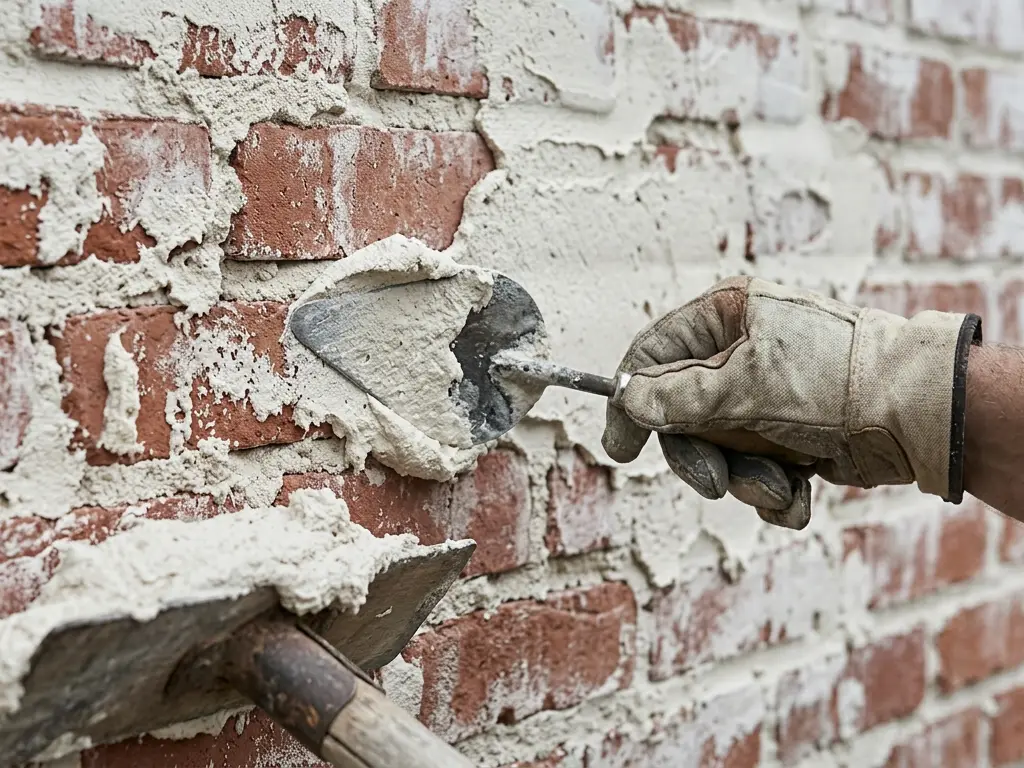
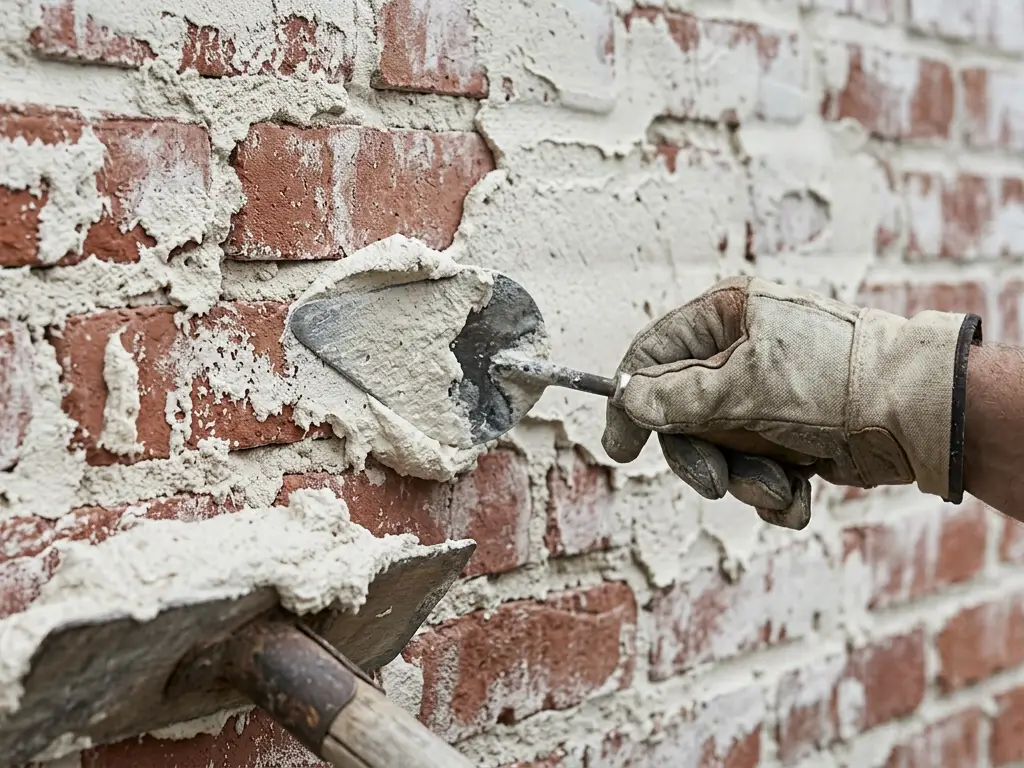
German smear, or schmear, is wet mortar spread across the brick and partly wiped back, leaving some brick covered and some exposed. It adds real texture, it is heavy, and it is effectively permanent: removing it means grinding or chemical work on the brick face. A Chicago-area company publishes $6,000 to $12,000 for a typical brick ranch.
Stain and mineral paint, the other two
Brick stain soaks into the brick and changes its colour without changing its texture, which makes it the tool for a different brick colour rather than a lighter one, at about $1 to $4 a square foot. Mineral silicate paint gives solid, even colour and stays breathable; HomeGuide expects it to last 20 years or more against 3 to 5 for acrylic latex.
Side by side
- Breathes: limewash, stain and mineral paint, yes; whitewash, less; German smear, depends on the mortar mix.
- Texture: limewash and stain keep the brick's; German smear adds its own; paint flattens it.
- Undo it: limewash in its first 5 to 7 days, and more easily than paint after; whitewash by stripping; German smear barely.
- Upkeep: limewash is refreshed by recoating; paint by scraping and repainting; German smear and stain need little.
- Over painted brick: only whitewash or mineral paint with a primer; limewash and stain need bare brick.
Which one for which house
For older, soft brick that needs to breathe, and for anyone who might change their mind, limewash is the safest choice. For texture and a rustic, permanent look, German smear. For a darker or different brick colour, stain. For a clean, solid colour, or brick that is already painted, mineral paint. Whitewash makes most sense on interior brick or brick that is already painted.
In a historic district, the product does not change whether review is needed. In St. Charles, for example, a first coating on unpainted masonry goes to the full Historic Preservation Commission whatever the product, so reversibility is worth raising in the application.
Not sure what your brick will take? Describe the house, the brick and the look you want, and get a straight answer on coats, prep and a typical price.
Call (630) 528-2808How each one ages around Aurora
Northern Illinois puts every brick finish through the same test: wet springs, hot summers and freeze and thaw all winter, with the average November night at 31.7°F by NOAA's normals for Aurora. Breathable finishes handle that well, because moisture inside the wall can leave rather than freeze behind a film. Limewash gradually washes thinner on the most exposed walls, which owners can refresh with a recoat. Thinned paint is more likely to show its failure as peeling. German smear behaves like the mortar it is made of.
Cost over the life of the finish
Up front, limewash and whitewash overlap: HomeGuide gives both $1.50 to $5.00 a square foot, while a premium limewash around Aurora runs $4 to $8. Over time the difference is what happens next. A limewash recoat skips stripping; a failed paint finish on brick has to be stripped, at $1.50 to $9.50 a square foot. German smear costs most at the start, $6,000 to $12,000 for a typical brick ranch in the Chicago area, and least to maintain.
What to ask before choosing
Four questions narrow the choice quickly. Do you want lighter brick, or different brick? Do you want to keep the brick's texture, or add texture? Might you want the bare brick back one day? And is the brick bare, painted or sealed? Lighter, textured, reversible and bare points to limewash. Different colour points to stain. Added texture and permanence point to German smear. Already painted points to mineral paint or whitewash.
Questions people ask
What is the difference between limewash and whitewash?
Limewash is a mineral that soaks into brick and lets it breathe. Whitewash is thinned paint that forms a film on it.
Is German smear the same as limewash?
No. German smear is mortar spread over the brick, adding texture, and it is effectively permanent.
Which brick finish lasts longest?
HomeGuide expects mineral paint to last 20 years or more. Limewash weathers and is refreshed every 5 to 7 years.
Which finish can be reversed?
Limewash, within its first 5 to 7 days, and more easily than paint after that. German smear barely at all.
Can you limewash over whitewash?
Not directly. Whitewash is paint, and limewash cannot bond to paint. It has to be stripped first.
Which costs more, German smear or limewash?
German smear, as a rule. A Chicago-area company publishes $6,000 to $12,000 for a typical brick ranch, against $4 to $8 a square foot for limewash.
Can brick stain make red brick look white?
Not really. Stain shifts brick colour but does not lighten it much. Limewash or mineral paint are the routes to white.
Talk it through before anyone opens a bucket
Say what the brick is, whether it has ever been painted or sealed, and how much of it shows from the street. You will hear what the job usually involves, what it tends to cost, and whether your town needs a sign-off first.
Call (630) 528-2808