
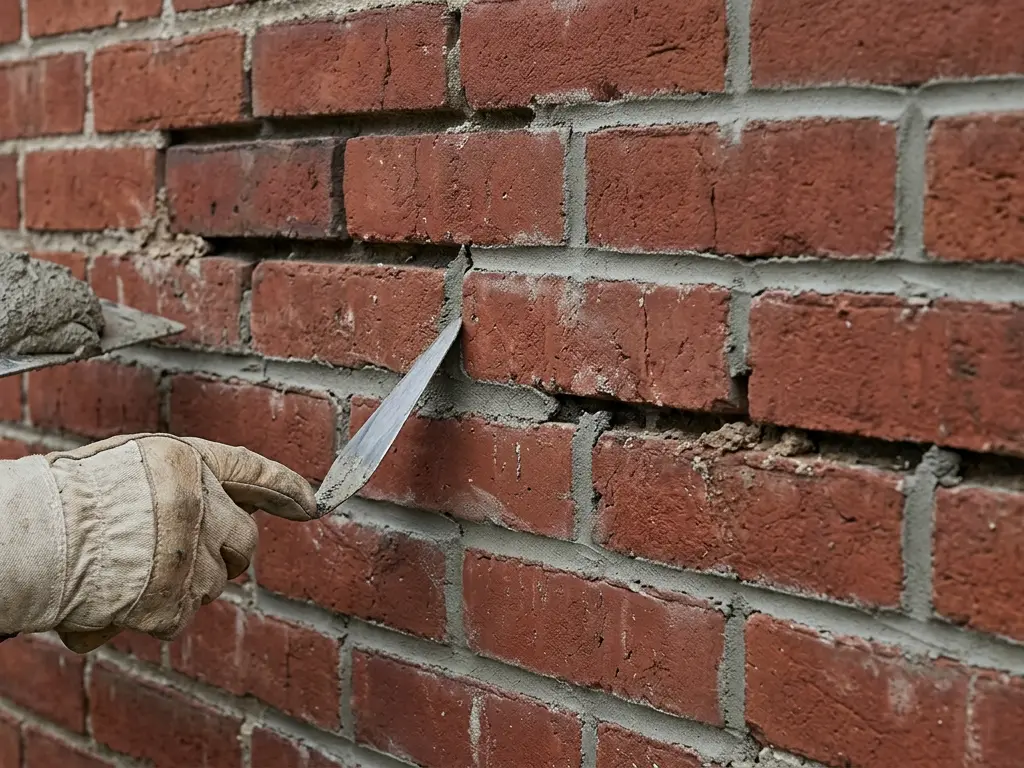
Five checks you can do in ten minutes
Aurora Limewash: Signs Your Brick Is Ready for Limewash in Aurora
Limewash only works on brick that can drink it in. Here is how to tell before anyone quotes.
- Aurora and ten towns within 20 miles
- Written price before work starts
- Licensed, insured local contractors
- Historic district rules covered
Aurora Limewash wrote this guide for owners of brick houses around Aurora who are wondering whether limewash will work on their walls. The short version: limewash bonds by soaking into bare, absorbent masonry and hardening there, so anything that keeps water out of the brick keeps limewash out too. These are the checks a good contractor makes, and you can make most of them yourself.
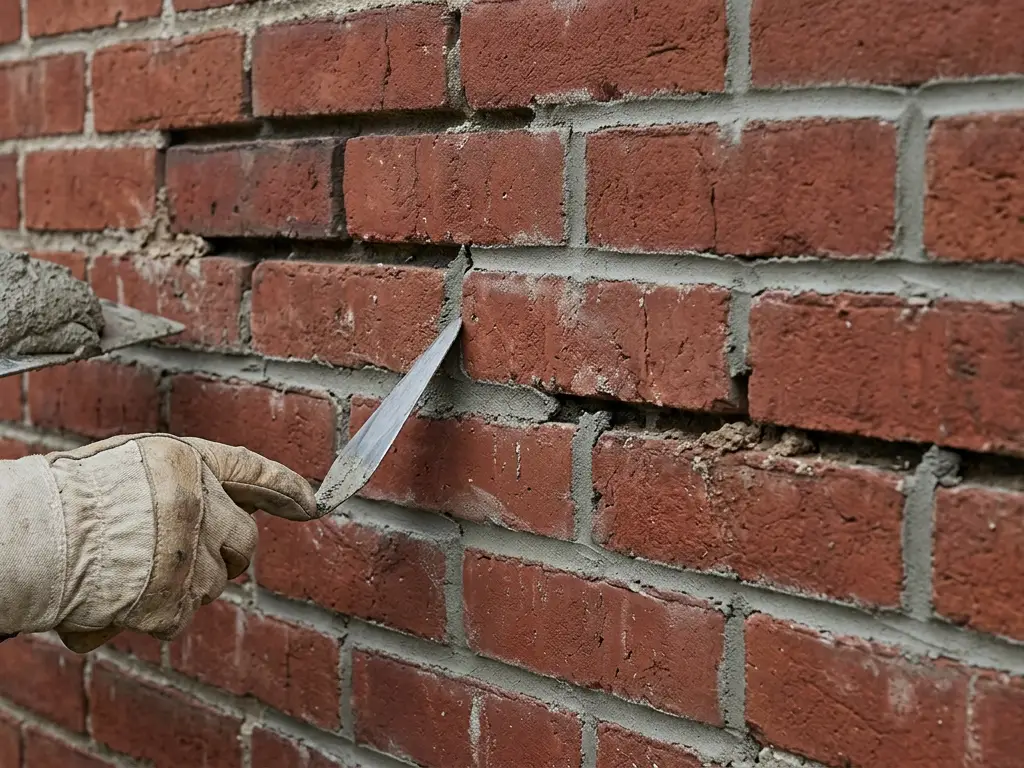
The splash test
Throw a cup of water at the brick, or spray it with a bottle, in a few places: low on the wall, under a window, and somewhere sheltered. If the brick darkens and the water disappears within a minute or so, it is absorbent enough for limewash. If the water beads and runs off, something is sealing the surface: a clear sealer, a water repellent, or brick so dense it barely absorbs. A wall can do both in different places, which is worth knowing.
Look for old paint and sealer
Paint is usually obvious, but faded or thin paint is not. Look closely at mortar joints and at areas behind shrubs and downspouts, where old paint often survives. A clear sealer leaves a slight sheen and makes the brick look a shade darker than it should. Romabio gives no guarantee for its Classico limewash over surfaces painted with acrylic or oil paint, so either finding changes the plan: stripping first, covered on the paint removal page, or a mineral paint instead.
Not sure what your brick will take? Describe the house, the brick and the look you want, and get a straight answer on coats, prep and a typical price.
Call (630) 528-2808Check the mortar
Run a key along a few joints. Hard, full joints are fine. Mortar that crumbles to sand, joints recessed well behind the brick face, or stair-step cracks mean repointing first. Limewash is a finish, not a repair, and it will not hold failing mortar together.
- Full and hard: ready for limewash
- Slightly recessed but sound: usually fine, ask the contractor
- Sandy, crumbling or cracked: repoint first
Read the stains on the wall
White, powdery salt on the brick (efflorescence) means water is moving through the wall and leaving minerals behind. It needs to be cleaned off and its source, often a gutter, downspout or grading problem, fixed before limewash. Green or black staining in shaded spots is algae or mould and needs cleaning first too. Brick with faces flaking off (spalling) has usually been through freeze and thaw with water trapped inside, and should be assessed before any finish.
Old soft brick or new hard brick
Older brick is usually softer and more absorbent, and takes limewash very well. Newer face brick, including the brick on subdivision brick fronts in towns like Naperville and Plainfield, can be dense, with a smooth or wire-cut face. Some absorbs well and some barely absorbs at all, so the splash test matters most on newer houses.
The test patch settles it
Once the brick passes the checks, a small test patch on a less visible wall, at the dilution you are considering, is the final word. Limewash dries far lighter than it looks wet, so judge it dry, in daylight, a day or more later. Romabio says the finish is reversible in the first 5 to 7 days, which is exactly what the test patch window is for.
Not sure what your brick will take? Describe the house, the brick and the look you want, and get a straight answer on coats, prep and a typical price.
Call (630) 528-2808What the checks mean for the price
A wall that passes everything is quoted on square footage and coats alone, typically $4 to $8 a square foot around Aurora. Each failed check adds a line: stripping paint or sealer adds $2 to $4 a square foot, and repointing runs $8 to $30 a square foot by a national cost guide. The cost guide puts every number in one place.
A quick checklist for the walk around the house
Take ten minutes and walk every side of the house with a spray bottle and a key. Spray low on each wall and under each window and watch whether the water soaks in. Scratch a few joints. Look behind shrubs and downspouts for old paint. Note any white salt, green staining or flaking brick faces. Photograph anything odd. That walk tells a contractor most of what they need before a site visit, and it tells you whether the job is a simple limewash or a limewash with preparation.
When the answer is not limewash
Sometimes the checks point elsewhere. If the brick is dense and beads water everywhere, a breathable mineral paint is the usual alternative. If you want darker or different brick rather than lighter brick, a stain is the tool. If the brick is badly spalled or the mortar is failing across a whole elevation, repair comes first and the finish is a later decision. The [limewash, whitewash and German smear guide](/blog/limewash- vs-whitewash-vs-german-smear/) compares the options.
What a contractor adds to your checks
A contractor repeats your splash test and mortar check, then adds a few of their own: how the brick behaves on the sunniest wall, whether downspouts or grading are pushing water at the base, and whether anything above the brick, such as a leaking gutter, will keep wetting it. They will also look at window sills, lintels and any stone trim, and ask whether you want those washed or left natural.
Questions people ask
How do I know if my brick can be limewashed?
Splash it with water. If it darkens and soaks it up within a minute or so, it is absorbent enough. If water beads, something is sealing it.
What are the signs my brick has been sealed?
Water beads on it, the surface has a faint sheen, and it looks a shade darker than similar brick.
Can you limewash brick with efflorescence?
Not until the salt is cleaned off and the water source causing it is fixed.
Does mortar need repair before limewash?
Where it is sandy, crumbling or badly recessed, yes. Limewash will not hold failing mortar together.
Will limewash work on new brick?
Often, but dense face brick may absorb too little. The splash test and a test patch decide it.
What does efflorescence on brick mean?
White, powdery salt on the face means water is moving through the wall. Clean it and fix the source before any limewash.
Should I test more than one wall?
Yes. Sheltered, sunny and low walls can absorb differently, and a sealer may cover only part of the house.
Talk it through before anyone opens a bucket
Say what the brick is, whether it has ever been painted or sealed, and how much of it shows from the street. You will hear what the job usually involves, what it tends to cost, and whether your town needs a sign-off first.
Call (630) 528-2808