Aurora Limewash: What to Expect From a Limewash Project in Aurora
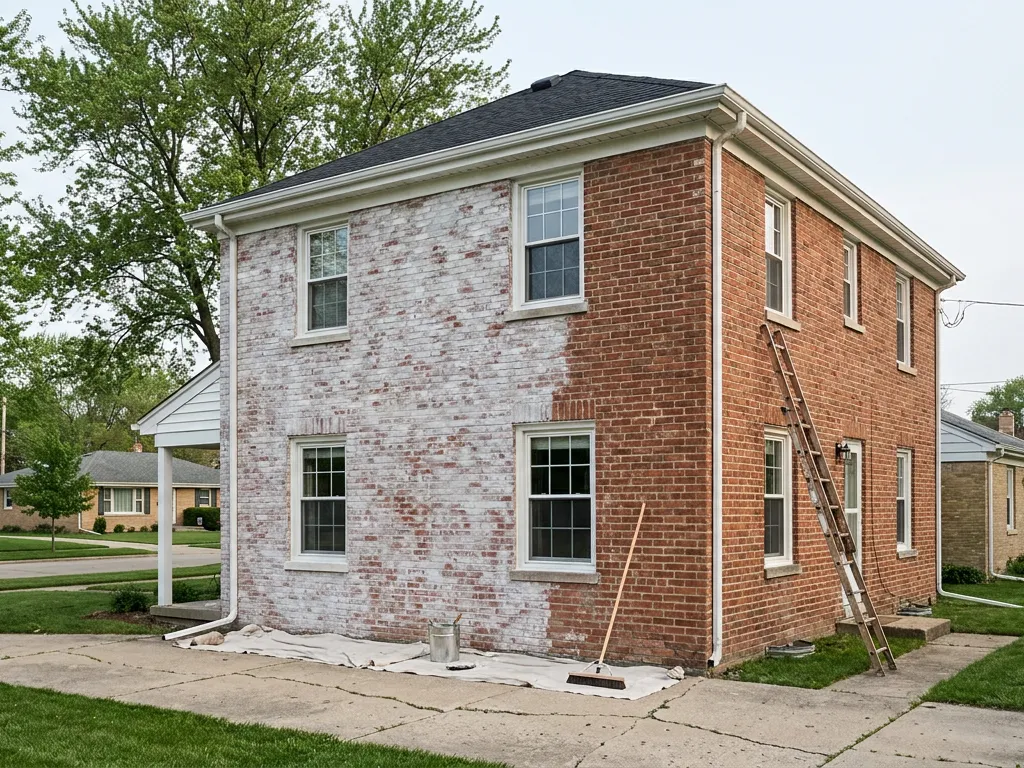
Aurora Limewash is a referral site that arranges limewash for brick homes through local contractors around Aurora, IL, and this guide walks through what a limewash project involves. Every contractor works a little differently, but a careful job follows the same order, because each step depends on the one before it. Knowing the order tells you what to check at each stage.
The first call: facts about the house
A fair price needs someone to see the brick, so the first call is for facts. Have these ready: the town, whether the brick has ever been painted or sealed, roughly how much brick shows and on how many storeys, and the look you want, from a faint wash to near-solid white. If the house might be in a historic district or under a homeowners association, say so now, because it changes the schedule. The contact page lists what helps.
The site visit and the written price
A proper site visit starts with a splash of water on the brick. Bare brick darkens and drinks it in; painted or sealed brick lets it bead, and limewash will not bond there until that coating is stripped. The visit should also cover the mortar joints, efflorescence, staining, organic growth and old paint, and measure the masonry, including any second-storey walls that need ladders or scaffold.
Then comes the written price. It should list the product, the number of coats (one gives a translucent wash, two fuller coverage, three near-opaque), the preparation included, such as cleaning, repointing or stripping, and the protection and clean-up. Settle the payment terms and what the contractor stands behind, in writing, before accepting it. Limewash is designed to weather, so a warranty against fading makes no sense; workmanship, such as limewash that fails to bond on properly prepared brick, is the thing to ask about.
Ready to see what limewash would look like on your brick around Aurora? Call to talk through your brick and ask for a written price.
Call (630) 528-2808Approval, if the house needs it
In a historic district, the certificate comes before any work. In Aurora, masonry work and complete repainting need a Historic Certificate of Appropriateness, applied for at the Building and Permits Division at 77 S. Broadway. In St. Charles, coating masonry that is not already painted or stained goes to the full Historic Preservation Commission. Batavia now requires a certificate for painting previously unpainted exterior materials, and Geneva's commission reviews exterior alterations in its district that need a building permit. A test panel and the product data help the application. The historic district rules guide has each town's process.
Preparation day
Limewash is caustic while wet, with a pH of 13 on Romabio's safety data, so windows, trim, doors, lights, plants and paving next to the wall are covered first. The brick is washed, efflorescence and growth are cleaned off, and any repointing or paint stripping is done. New mortar is left to cure before limewash goes over it.
Exterior work leaves the house usable. Keep windows near the wall being washed closed, move anything parked against the house, and keep pets and children clear of wet limewash and the buckets until it has dried and hardened.
The test patch
A small area on a less visible wall is washed at the agreed dilution and left to dry. Judge it dry, in daylight, because limewash dries far lighter than it looks wet. If it is wrong, Romabio's 5 to 7 day reversibility window means it can be washed back with a pressure washer or household vinegar and the dilution adjusted before the whole house is done.
Application
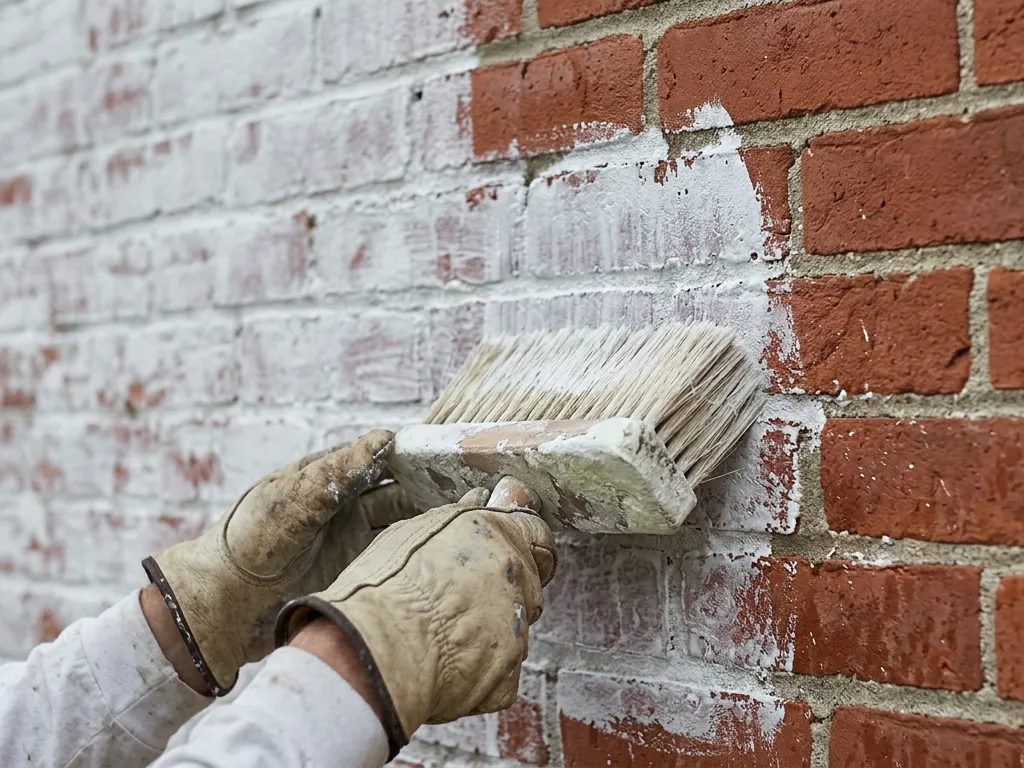
The wall is dampened thoroughly, then the first coat goes on, best by hand with a large masonry brush, often starting on the shaded side. Romabio's instructions give 2 to 8 hours of drying before the second coat. For an aged look, the wash is worked or sprayed back as it starts to set, anywhere from 10 minutes to a couple of hours depending on sun, letting brick show through. After 3 to 4 hours of drying, normal rain no longer affects it.
Cure, clean-up and the first week
Protection comes off, splashes are rinsed, and the wall is left to cure. For several days the limewash keeps changing as it dries and hardens, usually getting lighter and more even, so expect it to look much softer than it did wet. Keep sprinklers off the wall while it cures; an ordinary shower is no concern.
If an area still looks wrong once it has fully dried, raise it within the first week, while the 5 to 7 day window still makes adjustments easy. Ask too whether touch-ups in the first season are included, since that is when any patchy areas show.
The years after
Limewash needs no regular cleaning. Keep sprinklers pointed away, keep gutters and downspouts working so water is not running down the brick, and let plants grow back from the wall a little so it can dry. HomeGuide puts reapplication at every 5 to 7 years to keep the original coverage, with exposed walls going first. A recoat is a re-wet and brush, often at a greater dilution, covered on the limewash touch-up page. Keep a note of the product and tint, because it makes matching easy later.
The whole-house version of this process, with its typical price, is on the exterior brick limewash page. For a smaller first project, the fireplace limewash page covers the same steps indoors, with no weather window to plan around.
Sources: Romabio, Classico Limewash product data, safety data, FAQ and instructions; HomeGuide, How Much Does It Cost to Paint a Brick House? (February 2026); A Chicago-area limewash applicator's published cost guide (2026); City of Aurora, City of St. Charles, City of Batavia and City of Geneva historic preservation pages.
Questions About a Limewash Project
How long does a limewash project take?
It depends on the preparation and the size of the house. After cleaning and any repairs, there is a test patch to judge dry, then two coats 2 to 8 hours apart. Agree the schedule when you get the written price.
Do I need to be home during limewashing?
Not usually for the exterior work itself, though windows near the wall stay closed. Be there for the site visit, to talk colour and coverage, and to judge the dried test patch in daylight.
Why does limewash look darker when wet?
Limewash dries much lighter than it looks wet, and keeps lightening for several days as it hardens. Judge the colour only once a patch is fully dry, in daylight.
What should a limewash quote include?
The product and tint, the number of coats, preparation such as cleaning, repointing or stripping, protection of windows, trim and plants, and clean-up. Get it in writing, with payment terms, before any work starts.
What happens if I do not like the test patch?
Romabio says its limewash can be washed back in the first 5 to 7 days, with a pressure washer or household vinegar. The dilution or tint is then adjusted and a new patch tried before the whole house is done.
Thinking about limewash in the Aurora area?
More From the Blog
-
What Limewash Costs in Aurora, IL
Every limewash price on the site in one table, from a fireplace surround to a whole brick house around Aurora.
6 min read
Read more -
The Best Time of Year to Limewash in Aurora
Limewash cures with the weather. The maker's temperature rules and Aurora's climate normals give a clear season, mid-May to early October.
6 min read
Read more -
Best Limewash Companies Serving Aurora, IL
Six companies that advertise limewash around Aurora, checked against their own websites, with the questions to ask any of them.
6 min read
Read more